Write to us
the fields marked with * are mandatory

Few networks work as reliably as your blood vessels. They continuously transport blood, nutrients and oxygen, keeping every function of your body supplied. Even small changes can disrupt this process and increase the risk of disease. This is why responsible preventive care deserves particular attention. Modern imaging procedures can show at an early stage whether there is a risk of vascular disease. This provides orientation and can help identify potential dangers before serious events occur.
Blood vessels do more than we usually notice in everyday life. They respond flexibly to changing demands and maintain stable blood flow even when strain is already increasing. This ability to adapt and compensate means that changes in the vessel walls may not be noticeable at first.
Risk factors such as high blood pressure, persistently elevated blood lipids or silent inflammatory processes also act over many years. They gradually alter vascular structures without immediately causing pain, pressure or other clear warning signs.
Over the years and under the influence of various factors, the vessel walls can change. This can set processes in motion that increasingly impair blood flow. In turn, this raises the risk of heart attack, stroke and circulatory disorders in the arms and legs.
Early diagnostics can provide clarity before serious events occur.
A basic vascular check, for example at your general practice, quickly provides an initial picture of your personal risk. Doctors discuss symptoms and risk factors with you, measure your blood pressure and pulse and assess laboratory values such as blood lipids, blood glucose and inflammatory markers. The ankle-brachial index (ABI) and a Doppler examination can also indicate whether blood flow in the legs is impaired or whether narrowing may be developing.
If abnormalities are found, a vascular medicine specialist can assess the findings in more detail. Color Doppler ultrasound of the carotid arteries, leg vessels or abdominal aorta can show how well the vascular system is functioning and help assess the current risk of heart attack or stroke.
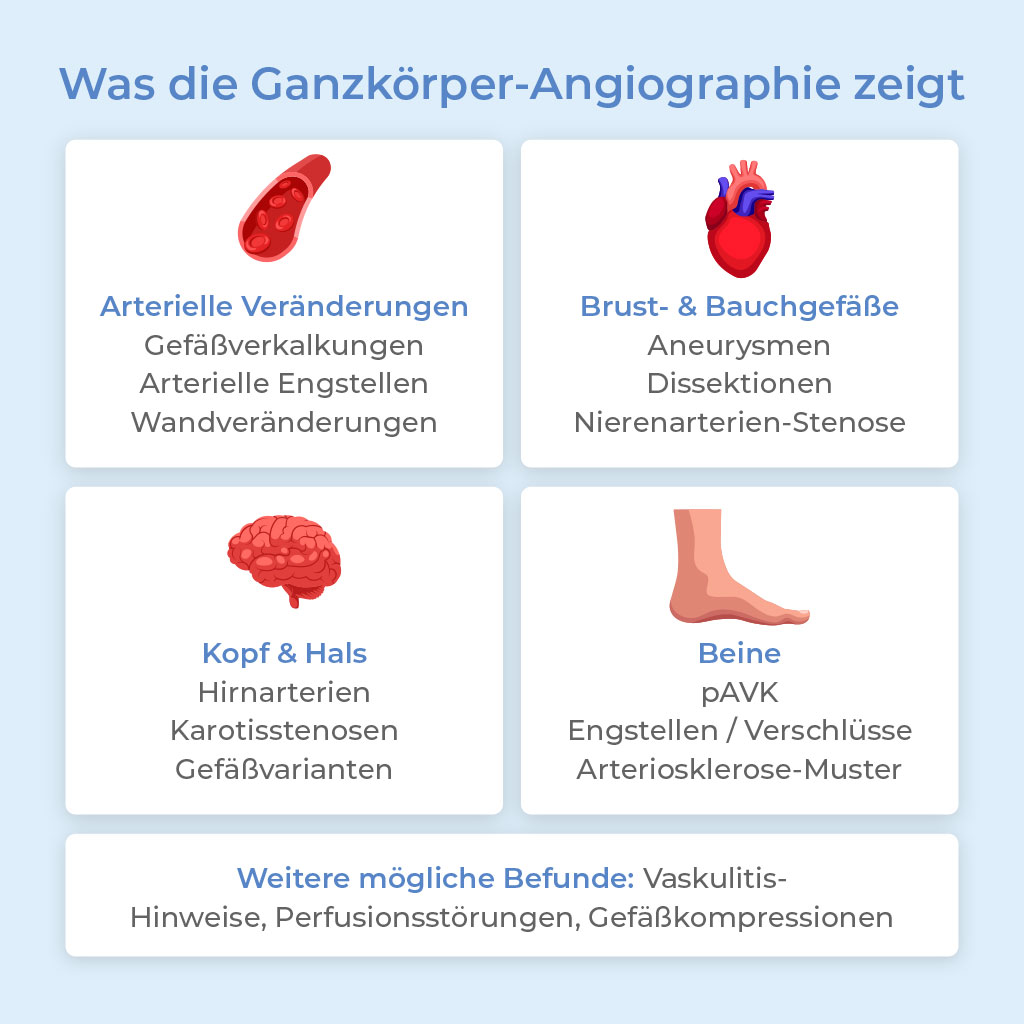
Whole-body angiography adds a level of diagnostic detail that basic vascular examinations cannot provide. While ultrasound and simple vascular checks visualize only individual regions, angiography at our radiological prevention center in Düsseldorf shows the condition of the entire vascular system in high resolution.
The examination uses special MRI sequences that make blood flow visible while also displaying the vessel walls. The method does not use X-rays and can reliably visualize areas that are otherwise difficult to assess.
For preventive care, this provides an important advantage: whole-body angiography shows not only how the blood flows, but also the structural condition of the vessels.
This gives you a comprehensive picture of your vascular health and can support timely action before critical changes develop.
We recommend whole-body angiography for people with a generally increased risk of vascular disease. This includes women and men with high blood pressure, diabetes, elevated blood lipids or a family history of heart attack or stroke. Smokers and people with chronic inflammatory processes may also benefit from a comprehensive vascular assessment at our radiological prevention center in Düsseldorf.
For most risk groups, an examination every two to three years may be appropriate. If the risk is particularly high or vascular disease is already present, a shorter interval may be useful. This creates a structured form of monitoring that can make risks visible early and support long-term preventive care.

the fields marked with * are mandatory
We use modern MRI procedures to support a forward-looking health strategy. This gives you not only numbers and values, but also a clear image of the condition of your blood vessels and specific information for your further preventive care.
Contact us to arrange an appointment!
Image material: © กาซือมะ สาและ / stock.adobe.com, © 123levit / stock.adobe.com