Write to us
the fields marked with * are mandatory

Few organs work as hard every day as the heart. Without a break, it keeps the body moving and supplies every tissue with the circulation it needs. That is precisely why comprehensive heart screening deserves particular attention. Changes often develop unnoticed, but they can still have consequences. Cardiac MRI provides a view of processes that may otherwise remain hidden and shows the condition of your heart in detail. This creates a valuable basis for identifying risks early and taking long-term preventive action.
Many heart diseases develop in the background. The heart has an enormous ability to adapt and can keep the body stable even when strain is already increasing. As a result, changes can easily remain unnoticed in everyday life.
In addition, typical risk factors such as high blood pressure, elevated blood lipids or chronic inflammation act gradually. They influence the structures of the heart over long periods without immediately causing noticeable symptoms.
The combination of the heart’s high resilience and slowly developing risk factors can therefore mean that many cardiac changes are detected only at a later stage.
By the time changes become noticeable, the heart muscle may already have lost some of its strength or may show structural damage. Regular screening can help identify such developments before they cause symptoms or reduce quality of life. Detecting risks early can make it possible to respond appropriately and support long-term heart health.
Basic heart checks by your general practitioner or cardiologist provide an important first impression of your heart health. In general practice, the focus is mainly on basic examinations. These include a detailed discussion of symptoms and risk factors, a physical examination, blood pressure measurements and laboratory values such as blood lipids, blood glucose and inflammatory markers. A resting ECG complements these diagnostics and can show signs of rhythm disturbances or cardiac strain.
If abnormalities are found, referral to a cardiology practice may be appropriate. More advanced and specialized cardiac diagnostic procedures are available there. Cardiac ultrasound assesses pumping function and the heart valves. An exercise ECG shows how the heart responds to physical exertion. Depending on the situation, long-term ECG, vascular diagnostics or other procedures may also be used.
Even so, some changes remain difficult to detect with these basic methods. In certain situations, a more detailed look at the heart tissue and its function may therefore be useful.
Heart MRI, as performed at our radiological prevention center in Düsseldorf, adds information that goes beyond ultrasound and ECG. While conventional screening examinations primarily show the heart’s pumping performance and rhythm, MRI provides a direct view of the heart tissue itself.
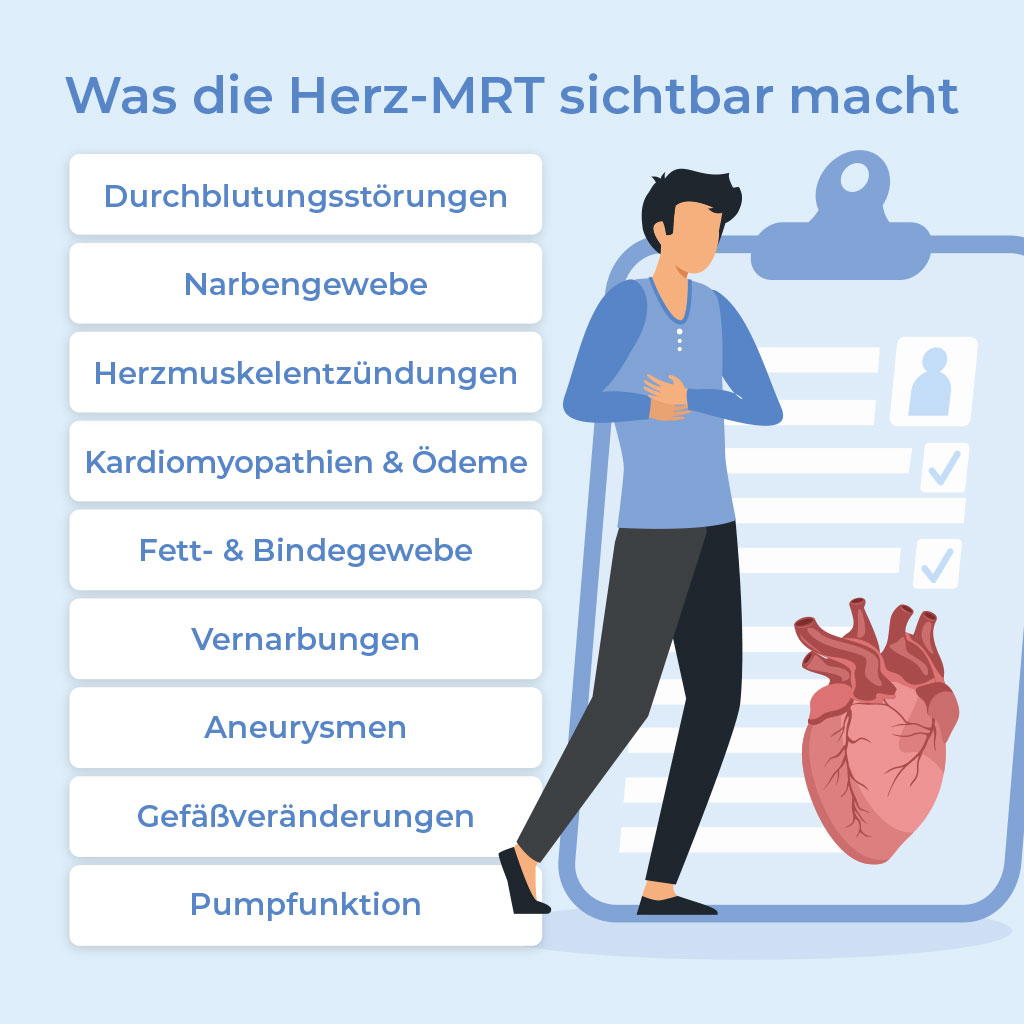
Cardiac MRI uses different imaging sequences that capture different properties of the heart muscle, such as water content, blood flow or the proportion of connective tissue. This allows us to identify edema, scarring, inflammatory changes or circulatory disturbances even before measurable functional changes develop.
For heart screening, this provides an important advantage: MRI shows not only how the heart works, but also the condition of the tissue from which it is working. Risks can therefore be assessed more precisely and changes may be detected at an earlier stage.
Heart MRI can be particularly useful for people with an increased risk of heart disease. These include women and men with long-standing high blood pressure, elevated blood lipids, diabetes or a family history of heart disease. Persistent stress, excess weight or previous inflammation of the heart muscle can also increase the risk of cardiac problems and make regular monitoring useful.
For these groups, heart MRI every one to two years may be advisable, especially when previous examinations have produced unclear findings or symptoms cannot be clearly classified. MRI provides a very precise assessment of the heart muscle and can support preventive healthcare.

the fields marked with * are mandatory
With cardiac MRI at our radiological prevention center in Düsseldorf, we offer a precise and gentle procedure for detecting cardiac changes at an early stage. This provides you with a well-founded assessment of your heart health.
Contact us to arrange an appointment!
Image material: © Jo Panuwat D / stock.adobe.com, © Alwie99d / stock.adobe.com