Write to us
the fields marked with * are mandatory

A low-aggressiveness prostate cancer does not always require immediate surgery or radiotherapy. Active Surveillance is based on close monitoring of the tumor, with treatment initiated only if relevant changes become apparent. Prostate MRI plays an important role in this approach: it provides precise images of the prostate and helps detect changes in the tumor at an early stage. For patients, this offers additional confidence during a phase in which the disease is deliberately monitored rather than treated immediately. Below, we explain what you need to know.
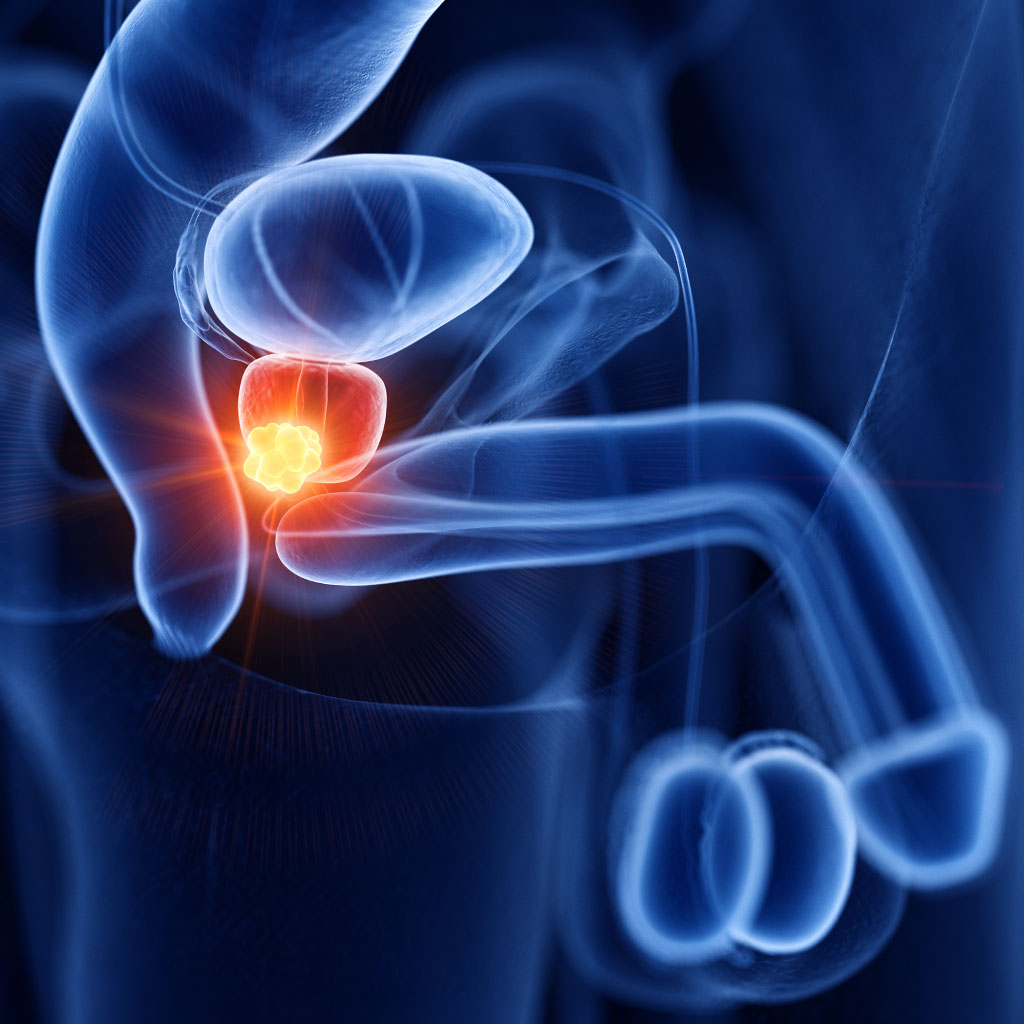
Prostate cancer is one of the most common cancers in men. The disease develops in the prostate gland and can progress very differently depending on tumor biology. While some tumors grow aggressively and should be treated promptly, others develop very slowly and remain confined to the prostate for a long time. The appropriate treatment therefore depends on more than the diagnosis of “prostate cancer” alone.
Several factors are important. These include the PSA value, individual symptoms and the extent of the tumor. Histological examination of tissue samples also plays a central role. Pathologists assess how strongly the cancer cells differ from normal prostate tissue. This is commonly reported as the Gleason score or ISUP grade group. The lower this classification, the less aggressive the tumor appears in the examination. Age, possible accompanying diseases and your personal situation are also taken into account when deciding on treatment.
For low-aggressiveness, slowly growing findings, close monitoring may be medically appropriate before surgery or radiotherapy is initiated. The reason is that early treatment does not always provide an immediate benefit in these cases but can be associated with side effects.
A diagnosis of prostate cancer does not automatically mean that surgery or radiotherapy is immediately necessary. In the case of a low-aggressiveness cancer, close monitoring may initially be more appropriate than immediate treatment, which can place considerable strain on the body. This approach is known as Active Surveillance.
Importantly, this is not passive waiting. The finding remains under structured medical observation so that doctors can assess whether the disease remains stable or whether there are signs of progression.
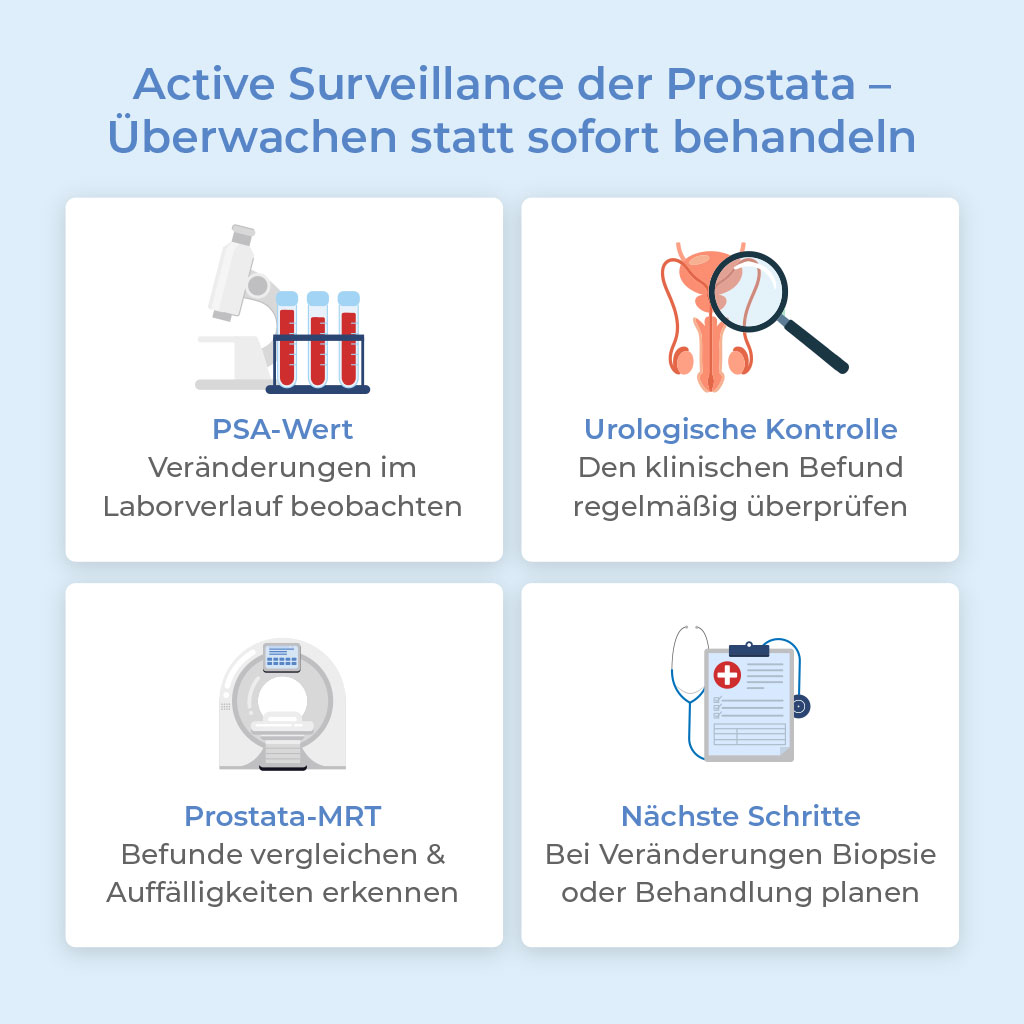
The aim is to start treatment neither too early nor too late. If the finding remains unchanged, monitoring can continue. If the tumor changes, the next treatment step can be planned in good time. Active Surveillance therefore combines restraint with a clearly defined medical safety strategy.
During active monitoring, it is important to identify tumor changes as reliably as possible. PSA values, urological examinations and, where necessary, biopsies form the medical basis. Prostate MRI complements these checks with precise imaging of the prostate.
It can help to:
For patients, this provides additional reassurance: active monitoring is based not only on laboratory values but also on detailed imaging. If MRI shows a suspicious area, this information can be taken into account during tissue sampling. Prostate MRI therefore becomes an important component for assessing progression more accurately and planning the next steps individually.
Prostate MRI may be useful at different times during active monitoring. It is often used to assess the initial finding more precisely or to evaluate changes over time.
Typical reasons for MRI during Active Surveillance include:
MRI does not replace urological care but complements it. It provides additional information that helps assess tumor progression and supports medical decisions on a broader basis.
How often prostate MRI is required during Active Surveillance depends on your individual findings. There is no fixed rule that applies equally to every patient.
An initial prostate MRI is often performed to assess the baseline finding precisely. Depending on the result, another MRI after around 12 to 18 months may be useful. If the PSA value, clinical findings and MRI remain stable over a longer period, further intervals can be adjusted individually, for example to every one to two years.
If your condition changes in a concerning way, MRI may also be necessary sooner.
With repeated MRI examinations, previous and current images can be compared. This makes it possible to assess whether a suspicious area has remained unchanged or whether its size, shape or signal characteristics have changed.
Important findings may include:
MRI does not provide an isolated decision on its own, but it is an important component of the overall assessment.

the fields marked with * are mandatory
Careful radiological follow-up can help identify changes in the prostate at an early stage and assess a low-aggressiveness prostate cancer more accurately. During Active Surveillance, prostate MRI provides important information that can be considered together with urological care when deciding whether active monitoring remains appropriate or whether further steps are required.
At the Radiology Düsseldorf prevention center, Dr. May is a highly experienced specialist for modern prostate MRI and radiological follow-up.
Contact us to arrange an appointment for your examination!
Image material: © Sebastian Kaulitzki / stock.adobe.com