Write to us
the fields marked with * are mandatory

Lung cancer is one of the diseases that is often detected only at a late stage – not because it is rare, but because it initially causes hardly any symptoms. This is exactly what makes early detection so important: the earlier changes in lung tissue are identified, the better the chances of treatment. But which examination method is best suited for this? We explain the options.
Lung cancer is one of the most common cancers worldwide and, despite medical advances, remains one of the leading causes of cancer-related death. In Germany, around 50,000 to 60,000 people are newly diagnosed every year (source: German Centre for Cancer Registry Data).
A basic understanding can help you assess warning signs more accurately and recognize possible risks.
This type of cancer develops when cells in the lung tissue multiply uncontrollably and lose their natural growth regulation. The tumor usually develops from the mucous membranes of the bronchi, the larger airways, but it can also arise in the smaller bronchioles or in the lung tissue itself. As the disease progresses, the cancer can spread to other organs via the blood or lymphatic system and form metastases.
Medically, two main forms of lung cancer are distinguished:
Distinguishing between the different types is crucial because it has a major influence on the choice of treatment and prognosis.
Lung cancer often causes noticeable symptoms only once it is already advanced. Nevertheless, there are warning signs you should pay attention to. These include a persistent or changing cough, shortness of breath, wheezing, chest pain or coughing up blood.
General symptoms such as unintended weight loss, persistent fatigue or night sweats can also occur. These symptoms do not automatically mean that lung cancer is present, but they should be medically assessed.
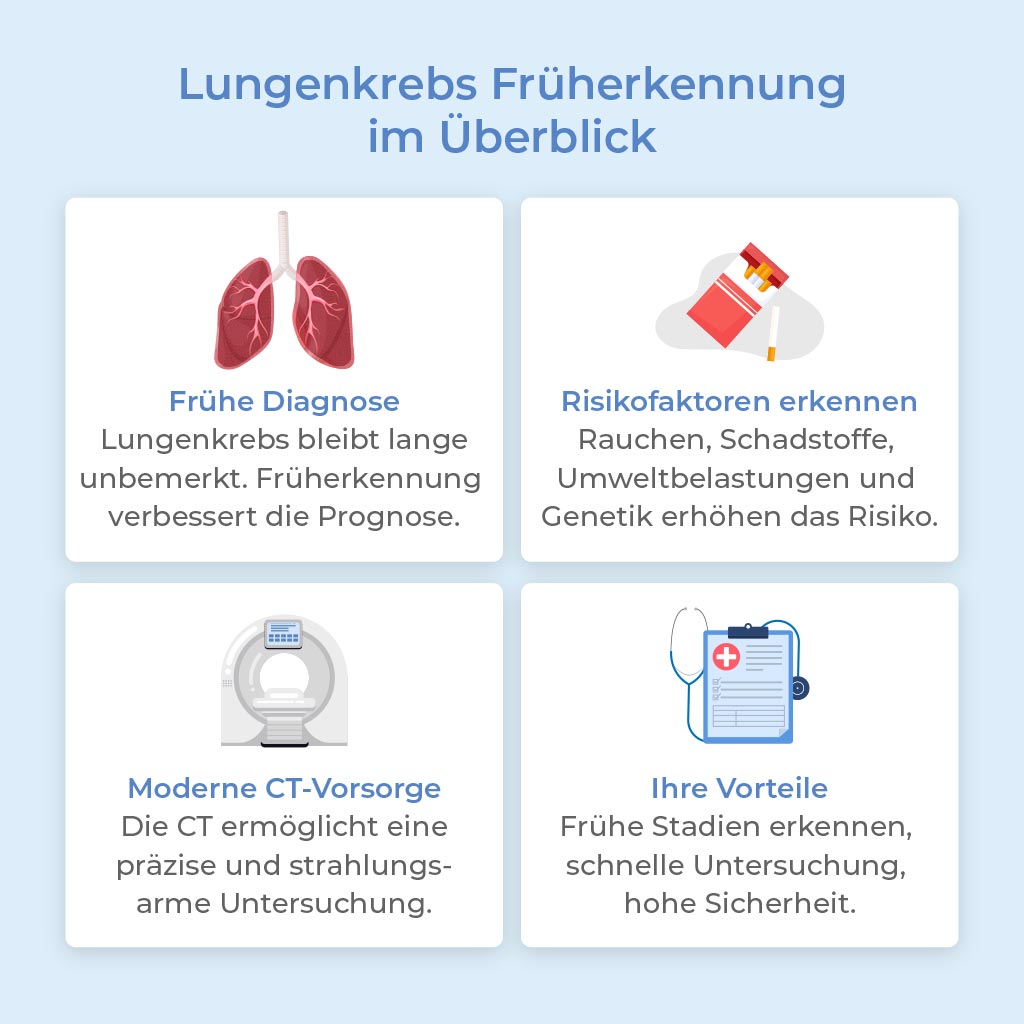
Smoking remains the greatest risk factor, both active and passive. Tobacco smoke contains numerous harmful substances that can irritate and alter lung tissue over many years.
Occupational exposure to substances such as asbestos or nickel, air pollution, chronic inflammation of the airways and genetic predisposition can also play a role.
One reason lung cancer is often detected late is that the lungs themselves do not have pain receptors. Changes in the tissue therefore initially cause no noticeable discomfort. Symptoms often appear only once the tumor becomes larger and affects neighboring structures such as the bronchi, pleura or nerves.
The first signs are also usually non-specific and can easily be mistaken for respiratory diseases, for example.
The location of the tumor can also allow the disease to remain hidden for a long time: carcinomas that grow deep within the lung tissue often cause no early warning signs. The disease may therefore remain undetected for months or even years.
The earlier lung cancer is detected, the greater the chances of successful treatment. In early stages, the tumor can often be removed completely or controlled with targeted treatments before it spreads through the body.
If the disease is not diagnosed until metastases are already present, treatment options are considerably more limited. This can worsen the prognosis.
Low-radiation lung CT is currently considered the most effective method for detecting lung cancer at an early stage. It can show even very small changes in the tissue long before symptoms develop. Ideally, this allows a possible disease to be identified at a stage when it is still readily treatable.
For you, this means greater certainty, earlier clarification and better chances of recovery. The examination provides clear results and is quick, painless and non-invasive.
The lungs are complex organs located deep within the chest. This makes it difficult to detect changes from the outside. Many conventional examination methods reach their limits because they provide only a restricted view of the fine lung tissue. Lung CT, by contrast, offers a particularly detailed way of visualizing pathological changes – even when they are still tiny and cause no symptoms.
A direct comparison shows why lung CT is currently considered the best method for early detection:
A conventional X-ray shows the lungs only as a two-dimensional image. Fine structures can overlap, so small changes may not be sufficiently visible. Lung CT, by contrast, creates numerous cross-sectional images that provide a detailed three-dimensional representation of the lung tissue. This allows us to detect even very small tissue changes.
A pulmonary function test measures how well the lungs are working but does not provide detailed images of the tissue. CT, by comparison, enables a detailed view of the internal structures and provides specific indications of possible diseases such as lung cancer.
Ultrasound uses sound waves, which are poorly transmitted through air-filled structures such as the lungs. As a result, it cannot provide a clear image of the internal lung tissue and changes within it remain invisible. Lung CT, on the other hand, can display the entire lung structure in detail and also reveal changes located deep within the lungs.
The examination is particularly recommended for people who have smoked for many years or have been exposed to harmful substances such as asbestos or nickel at work. A family history can also increase the risk and make regular monitoring useful.
For these risk groups, a low-dose lung CT every one to two years may be advisable.

the fields marked with * are mandatory
At our radiological prevention center in Düsseldorf, we use lung CT as an informative and low-radiation method for the early detection of lung cancer. Every examination is carried out with the greatest care and modern technology. This provides you with a reliable diagnosis and, if necessary, the opportunity for timely and appropriate treatment.
Simply contact us to arrange an appointment!
Image material: © chormail / elements.envato.com